
Eco Friendly Pest Control Tips for a Safer Home
Table of Contents
- Why Eco Friendly Pest Control Tips Matter for Your Household
- Start With Prevention: Seal Entry Points and Remove Standing Water
- Integrated Pest Management for Homeowners: A Smarter Framework
- Safe Pest Control for Pets: Protecting Animals and Children
- Seasonal Maintenance Calendar and DIY vs. Professional Threshold
- Frequently Asked Questions
Last Updated: September 21, 2026
Why Eco Friendly Pest Control Tips Matter for Your Household
Eco friendly pest control tips solve a pest problem without the neurotoxic residues conventional sprays leave on kitchen counters, baseboards, and floors where children crawl. At NoHarm llc, we've spent over 35 years studying how animals behave around homes, and the pattern is consistent: pests return when the conditions that invited them stay unchanged. Killing a rodent or a line of ants addresses the symptom; changing the habitat addresses the cause.
Start With Prevention: Seal Entry Points and Remove Standing Water
Prevention is the highest-return step in any eco friendly pest control plan, and it costs almost nothing. A common mistake is reaching for a product before walking the perimeter of the house.
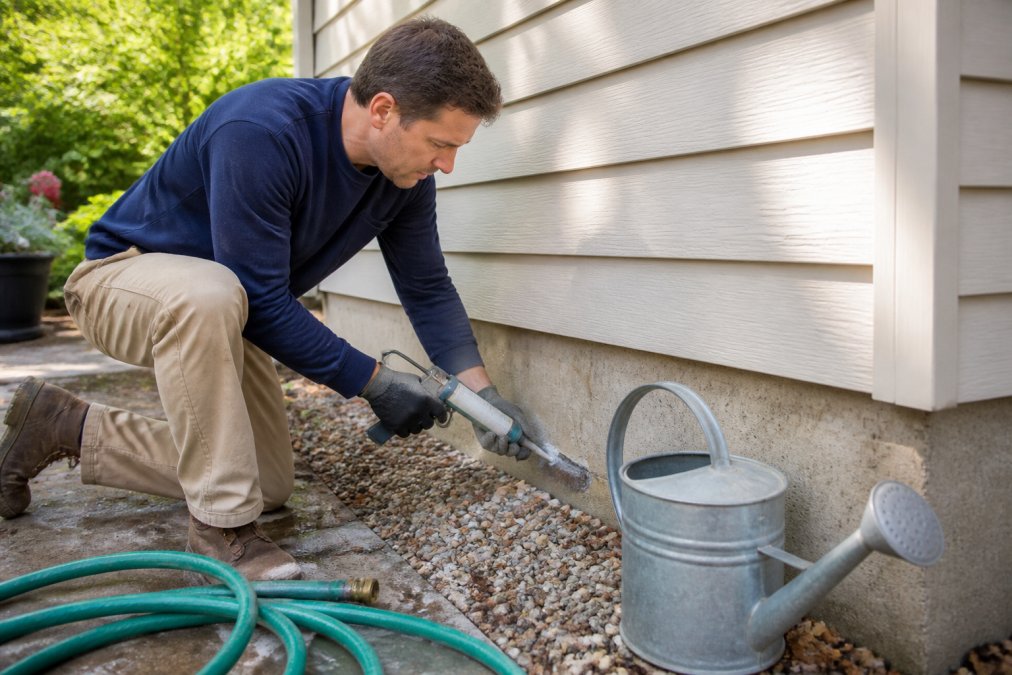
Start outside and work clockwise:
- Seal gaps wider than a pencil. Mice pass through openings the width of a dime. Fill gaps around pipes, vents, and utility lines with copper mesh or steel wool, then seal with caulk.
- Repair door sweeps and window screens. A torn screen is an open door for insects and, in warmer months, rodents.
- Clear standing water. Clogged gutters, plant saucers, birdbaths, and low spots in the yard all breed mosquitoes and draw wildlife. Empty or drain them weekly.
- Move food and water sources away from the structure. Pet bowls, compost bins, and bird feeders should sit well away from exterior walls.
- Trim vegetation back from the siding. Branches and shrubs touching the house create highways for pests.
Integrated Pest Management for Homeowners: A Smarter Framework
Integrated pest management for homeowners is a five-step cycle: identify, monitor, prevent, treat at the lowest effective level, and evaluate. It replaces the spray-everything reflex with a decision process.
Pest Identification and Monitoring
You cannot treat what you haven't identified. Droppings, gnaw marks, grease trails, and shed skins reveal the species, entry route, and population size. Set monitoring stations or sticky traps in non-pet areas, check the same spots weekly, and track the dates, a pattern emerges within two to three weeks.
Threshold-Based Treatment Decisions
Threshold-based treatment means acting when monitoring shows a pest population crossing a level you've defined as unacceptable, not on a calendar schedule. One ant trail near an exterior door is a nuisance; rodent activity inside a wall cavity justifies immediate action. Write your thresholds down before you have a problem, so the decision isn't made in a panic.
The Pet Toxicity Problem With 'Natural' Oils
- Tea tree oil is toxic to cats and dogs if ingested or applied to skin; cats lack the liver enzymes to metabolize it.
- Peppermint oil can cause vomiting, drooling, and lethargy in cats and small dogs.
- Citrus oils (d-limonene) cause neurological symptoms in cats and can irritate skin in dogs.
- Eucalyptus oil is toxic to both cats and dogs, even in small amounts.
NoHarm Rodent Disruption Scent - 32oz. →
Safe Pest Control for Pets: Protecting Animals and Children
Safe pest control for pets starts with reading the label, not the marketing. Any product applied in a home with a dog, cat, or toddler needs clear answers to three questions: what's in it, where does it go, and how long before the area is safe again.
A few rules that hold up in practice:
- Keep baits and traps out of reach. Rodenticides are a serious poisoning risk for pets and children. Avoid them entirely in homes with animals or young kids.
- Apply liquids to structure, not surfaces kids touch. Spraying the exterior base of a home is different from spraying a kitchen floor.
- Ventilate during and after application. Even plant-based products have a strong scent profile.
- Store everything locked and labeled. Treat every pest product like a cleaning chemical.
Seasonal Maintenance Calendar and DIY vs. Professional Threshold
Pest pressure follows the seasons, and so should your maintenance. Treating on a weather-tied schedule beats reacting to sightings every time. The calendar below is built around when pests are actually active, not when you happen to notice them.
Month-by-Month Eco-Friendly Maintenance Calendar
Month |
Primary Focus |
Key Tasks |
|---|---|---|
January |
Rodent exclusion |
Inspect attic, basement, and crawl space for gnaw marks and droppings; check exterior gaps after freeze-thaw cycles; refresh deterrents in voids |
February |
Early rodent pressure |
Monitor for rodent activity as food sources dwindle outdoors; seal any new gaps around pipes and vents; check stored food in pantry and garage |
March |
Entry sealing |
Walk the full perimeter; repair door sweeps and window screens; seal gaps wider than a pencil with copper mesh and caulk; clear winter debris from gutters |
April |
Moisture control |
Drain standing water from plant saucers, birdbaths, and low spots; inspect irrigation for leaks; trim vegetation back from siding |
May |
Ant and mosquito prevention |
Apply NoHarm to dry voids and baseboards; eliminate larval mosquito habitat; set pheromone monitors for early ant activity |
June |
Peak mosquito and fly season |
Refresh perimeter application with NoHarm Mosquito Disruption scent; keep compost bins sealed and away from walls; manage outdoor lighting to reduce insect attraction |
July |
Crawling insect management |
Reapply Noharm All-Purpose Insect after any moisture; monitor ant trails; check for wasp nests under eaves and in ground holes |
August |
Late-summer pressure |
Continue mosquito control; watch for rodent activity returning as outdoor food sources decline; inspect stored food and pet food containers |
September |
Fall exclusion prep |
Seal gaps before rodents seek winter shelter; repair screens; clear gutters; store firewood away from the structure |
October |
Rodent exclusion push |
Complete perimeter sealing; check attic and crawl space; move bird feeders and pet bowls away from exterior walls; refresh void deterrents |
November |
Winterization |
Inspect for new gaps after first freezes; ensure all food stored in sealed containers; monitor for rodent activity in walls and ceilings |
December |
Monitoring and maintenance |
Check monitoring stations weekly; refresh NoHarm Disruption scents on the monthly schedule; watch for signs of rodents seeking warmth indoors |
This calendar works because it front-loads prevention before each pest's active season. Sealing in March prevents ants in May. Sealing in September prevents rodents in December. Reacting in July is always more expensive and less effective than preventing in April.
DIY vs. Professional: A Decision Matrix
The DIY-versus-professional threshold is simpler than most people make it, but it requires honest answers to four questions:
Question |
Handle It Yourself If... |
Call a Professional If... |
|---|---|---|
Identification |
You have positively identified the pest species |
You cannot identify the pest, or multiple species are present |
Population size |
You see occasional activity, a few ants, one rodent, scattered droppings |
You see daily activity, multiple rodents, or evidence of a breeding population |
Location |
Pests are at exterior perimeters, in garages, or in accessible voids |
Pests are inside wall cavities, attics, crawl spaces, or near electrical/plumbing |
Duration |
Activity drops within 2-3 weeks of consistent prevention and treatment |
Activity persists after 4-6 weeks of consistent prevention and treatment |
Damage |
No structural damage; no chewed wires or gnawed framing |
Structural damage is present, or you suspect chewed wiring or contaminated insulation |
Health risk |
Species is a nuisance pest (ants, common spiders, boxelder bugs) |
Species poses a health risk (rodents, cockroaches, wasps, bed bugs) or you have asthma/allergies |
Cost-Benefit: DIY Natural vs. Professional Green Services
The cost comparison is not as one-sided as it first appears. A well-chosen deterrent applied monthly spreads its cost across the year, and prevention work, sealing, sanitation, moisture control, costs almost nothing beyond time and a few tubes of caulk. Professional green pest services carry a recurring fee, but also expertise, monitoring, and a guarantee.
Frequently Asked Questions
Is there such a thing as eco friendly pest control?
Yes. Eco friendly pest control use NoHarm Disruption Scents, biological controls, and habitat modification instead of synthetic chemicals. It includes sealing entry points, removing standing water. These methods aim to manage pests while reducing environmental impact and protecting pets and children. Many homeowners combine these with integrated pest management for long-term results.
How do natural repellents disrupt pest behavior?
NoHarm Disruption Scents work by masking scent trails, overwhelming an animal's sense of smell, or triggering avoidance. For example, a proprietary blend of essential oils, herbs, and spices can make an area smell unfamiliar and unsafe to rodents, prompting them to leave. This behavioral disruption differs from killing pests and supports a non-toxic, preventative approach.
What are the three C's of pest control?
The three C's are clean, close, and control. Clean means removing food and water sources. Close refers to sealing cracks, gaps, and entry points. Control involves monitoring and using targeted treatments like traps or NoHarm products. Together they form a simple framework for eco friendly pest control tips that prevent infestations without harsh chemicals.


